
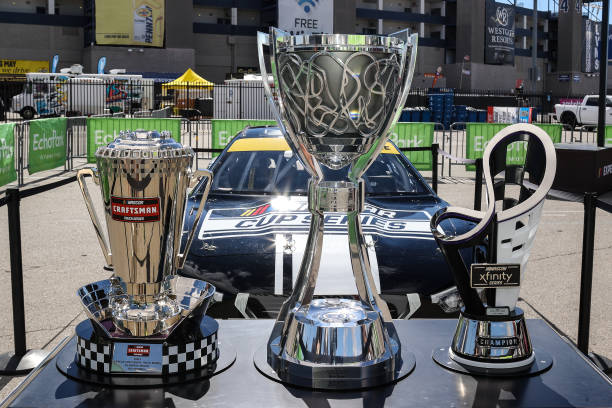
After Austin Dillon’s win at Richmond Raceway, the return of a familiar topic returned with a vengeance. Entering the race 28th in points (and leaving 25th), Dillon punched his ticket to the NASCAR Cup Series Playoffs. With the win-and-in format, all any fulltime driver has to do is win one of the first 26 races of the season to compete for a championship. If a team can figure it out for one race, they are deemed more worthy than a winless team who has shown consistency the entire season. As the Cup Series enters the final race of the regular season this weekend, there are 14 different winners. If there is to be another new winner (of the fulltime drivers), that would only leave 1 spot for a driver to point their way in. Potentially, 2 Top-10 drivers will be left out of the NASCAR Playoffs.
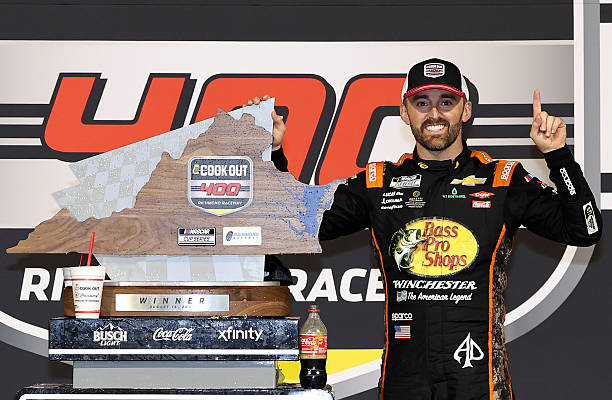
Photo by Samuel Corum/Getty Images
The aggravation of the NASCAR Playoff format is not a unique topic. It has been covered on this website a handful of times. This includes back-to-back weeks last year after two feel-good wins were spoiled by the anchor that is the NASCAR Playoffs. However, this article is not here to continue down the path of complaining. Well, not after this introduction at least. The simple reality is that the playoffs are here to stay. Barring a complete overhaul of NASCAR (or their TV partners), slapping the word “playoffs” to the season is not going away. However, it can be altered to find better middle ground. The alterations do not have to be major overhauls either. If NASCAR did these couple of tweaks to the current playoff format, there would be more acceptance of it. Will the sanctioning body implement these? Probably not. Should they? You can be judge of that.
The Point of Playoffs
Before getting to the tweaks, the discussion of a playoff format must be discussed. NASCAR is the only major motorsport that has a playoff system. Other motorsports still use some version of a season-long points system. Whoever has the most points after X amount of races wins the championship. Simple and easy to follow. However, NASCAR has bought into the Americanized playoff system that every stick-and-ball sport utilizes. Sure, auto racing and stick-and-ball sports have little in common. But, NASCAR (more so their TV partners) have deemed it necessary for the playoffs to be a thing.
Photo by Jeff Robinson/Icon Sportswire
The key question that seems to be lost right now in NASCAR is what the point of any playoff is. NASCAR might be copying the basic idea of a playoff system, but their execution strays from core foundation of other playoff systems. Simply put, the playoffs in any other sport is to see who the best team/player is during that stretch of games. Whoever wins the most through the rounds becomes the deserving champion. Is it always the best team over the regular season? No. Usually, it is the team that got hot at the right time.
Meanwhile, NASCAR’s current playoff format breaks up the playoffs in rounds that do not carry over from one to the other. You can argue that is how other sports work, but the key difference is that a team/player cannot coast through from round to round. Every advancement is earned. In NASCAR, a team can run middling one round and still advanced because others fall apart or playoff points. The current system does not translate how playoffs are supposed to work.
Finding Compromise Against the Fanbase
One of the major issues with NASCAR even using a playoff format is the betrayal of the fanbase. While some hardcore fans enjoy the system, the majority of the loyal base do not for good reason. Right now, the current playoff format punishes fans who pay attention every week. Win-and-in mixed with 3 race rounds does not reward someone for watching each week. Who cares about who is consistent when a driver dead-last in points can win a race and clinch a spot? All you need to know about the playoffs is who won during the first 26 races. A highlight reel can get that job done.
Despite the fan backlash to all or aspects of the playoff format, nothing too drastic has changed. The most notable change arrived after the 2022 season with eliminating the points requirement to qualify via a win.
With no realistic shot at a full season points format returning, how do you find something that could make the fanbase happy? The return of The Chase is an unlikely option, plus that grew tiresome with Jimmie Johnson/Chad Knaus gaming the system. Still, there is a way to find middle ground. Will it please everyone? Of course not; any good compromise means people on both sides are still unhappy. That said, here goes nothing.
Tweak #1: Return of the Wild Card
This seems to make too much sense. It would be the best blending of win-and-in while making points matter. From 2011 to 2013, NASCAR implemented a “wild card” rule for The Chase. Top-10 would still make it in on points, but the 2 winningest drivers from 11th to 20th would also make the then 12-driver field. For this tweak, the wild card rule would return but altered slightly.
While there are a segment of fans who want to reduce the size of the playoff field from 16 to 12 or 10, that is not a likely change. So 16 drivers still make the playoffs. How does that 16 driver/team field get put together? The Top-12 drivers on points make the playoffs no matter what. Winless or not, if a driver proves they are one of the 12 best during the regular season, they get a spot. Plus, the playoff points earned for finishing Top-10 would remain.
From there, the final 4 drivers/teams are the winners. If there are more than 4 winners, whoever has the most wins would be the first tiebreaker. Second tiebreaker is points position. No points position requirement to qualify either. Essentially, win-and-in for those outside the Top-12.
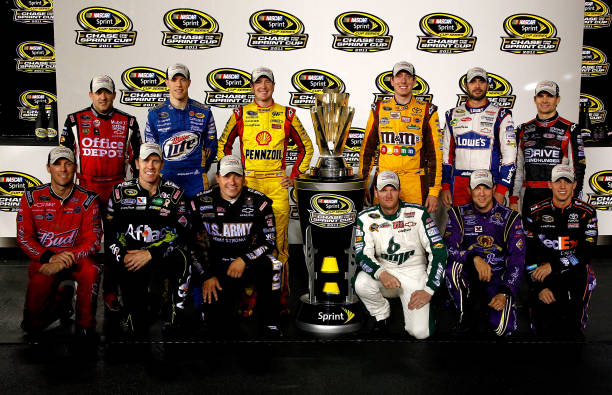
Photo by Jeff Zelevansky/Getty Images
The Benefit
With this system to figure out the playoff field, there should be more intrigue heading into the regular season finale. Currently, there is little drama outside of a new winner for Daytona. The only other thing to watch than a new winner is the points battle between Tyler Reddick and Alex Bowman. However, that could be dulled immediately with Reddick scoring more stage points than Bowman.

Photo by Logan Riely/Getty Images
If you use this tweak, now Daytona becomes much more interesting. The difference between 12th and 13th is 25 points. 12th (Joey Logano) has a win, which would mean 13th (Ryan Preece) leapfrogging him (without winning) would throw a wrench in the wild card picture. Anyone ahead of Josh Berry would be gunning for a win to get themselves locked in as well. Even drivers behind Berry in points would have a shot, as 4 winless drivers are within 35 points of the Wood Brothers driver. While Austin Dillon’s win would not have locked him last week, he only trails Berry by 16 points.
With this tweak, everything about the Coke Zero Sugar 400 becomes more interesting. Who scores points in the first two stages is now an actual talking point. A new winner could still clinch their way in.
Looking at the big picture, the existing winners outside the Top-12 in points still have to care how they run. In this age of race winner parity, having more than 4 winners outside the Top-12 is likely. Why not make something interesting out of it rather than simply locking those drivers in? Since Las Vegas, Josh Berry’s performance has not mattered. Under this wild card format, the 21’s success/failures are magnified in a more compelling way.
Tweak #2: 3 Race Final Round
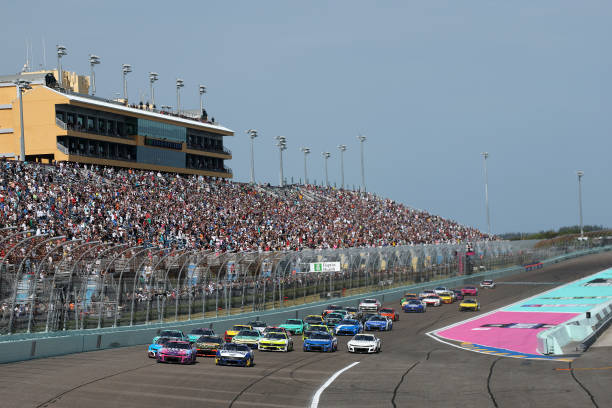
Photo by Chris Graythen/Getty Images
An obvious change that should be made starting next year. Boiling down an entire 36 race season to a single race is asinine. Actually, it is worse than a single race. Really, each NASCAR championship comes down to the final stage of the last race. Stage points do not matter in the last race, so all it comes down to is where a driver finishes in that final stint. A race can be lost in the first two stages, but only can be won in the final one.
Even if you want a single race championship, why do stage points not matter anymore? For 35 races in the year, the results of Stage 1 and 2 factor into the current round or playoff points. However, the final race discards that for drama. NASCAR would not want a driver winning both stages and only having to finish 7th to clinch the championship apparently.
Altering to the Championship Four to a 3-race stretch makes too much sense. Blend together a variety of tracks (that does not include a superspeedway) and see who is the best out of the four remaining drivers/teams. Reduce the regular season to 24 races in order to squeeze this in there.
In motorsports, too much outside a driver’s/team’s control can alter the result of one race. A team can play the perfect strategy to be undone by an ill timed caution, piece of debris, or another driver wrecking into them. With 3 races, at least a driver can attempt to respond to bad luck striking. The likelihood is low, as has been seen from drivers in the Round of 8 struggling to climb out of holes even with playoff points (Harvick 2020). Still, there is more positive from this than not. Also, the forced manufacturing of the “Game 7 moment” would ease up a bit. Some years would be nail biters, others would be blow outs. But hey, that is sports.
Bonus Tweak: Retain Points Actual Points Position
The first two tweaks featured in this article are supposed to go hand-in-hand. This tweak could also be lumped in with them, but could (and should) be administered without those changes.

Photo by Logan Riely/Getty Images
Outside of the championship implications of the win-and-in system, the major drawback to it is the financial boom teams experience from winning a race. Whether it is a superspeedway lucky win, road course ringer dominating, or finding the right setup for one track, a single win should not “save” anyone’s season. If a team has been 28th in points all year, that is where they should finish. Instead, the winning teams get to leapfrog all the consistent teams to secure a better points position. That jump is the difference of millions of dollars for a team low in points. Sorry, but a single win should not give that much of a financial boon. Winning a race pays more than any other position; that is where the financial incentive should end.
If NASCAR had all non-Championship Four teams revert back to their actual season-long points position, then the heartache over the win-and-in would ease (at least for this writer). Sure, 25th in points might get a spot over someone in the Top-10, but at least the likelihood of that team/driver staying there is low. If said team/driver advance to the Championship Four, then they earned their boosted paycheck.
A Better NASCAR Playoff Format
Will these tweaks completely fix NASCAR’s Playoffs? Absolutely not. At the end of the day, an elimination style playoff format where everything resets after each round is flawed. However, the tweaks do address some of the largest concerns/drawbacks to the current system. For an extreme example, the current system could have a driver win the first 35 races and every stage in the 36-race season. However, that driver finishes behind any of the other Championship Four drivers in the final stage, then they lose the championship. Nonsense right? A 3-race Championship Four eliminates that from happening.
The obvious preference would be to go back to a season-long points format. Every race matters. Wins go back to being important because they are wins. Underdog wins are again feel good stories rather than rage bait material. But a season-long format is unlikely to happen anytime soon. The Chase returning seems equally unlikely.
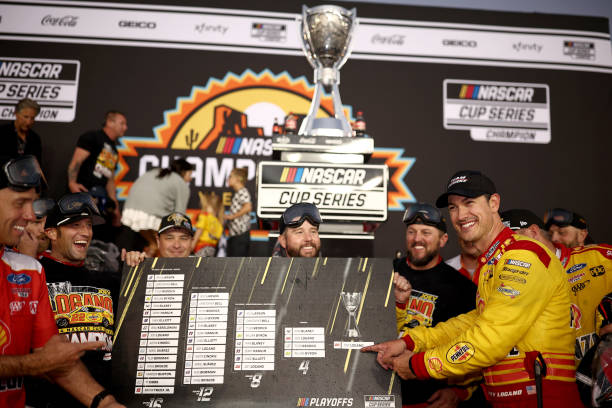
Photo by Jared C. Tilton/Getty Images
Are the tweaks discussed here necessarily likely either? Not necessarily. It seems that the playoff committee has discussed expanding the final round. But a certain broadcasting partner has apparently shot that idea down. That said, these tweaks are not drastic changes that completely alter what NASCAR and their partners are striving to achieve.